As a growing brand adds retail, Direct-to-Consumer (DTC), and marketplace orders, fulfillment stops being one workflow and starts becoming a set of competing priorities.
A retail order needs compliant pallets and a delivery appointment. A DTC promotion can spike unit orders overnight. A marketplace order brings its own labels, prep rules, and shipping deadlines. In a lot of operations, all three are pulling from the same inventory, the same dock schedule, and the same warehouse team.
That pressure usually does not show up as one big failure all at once. It shows up in smaller conflicts first. Inventory gets committed in multiple directions. A retail shipment starts pushing against a parcel cutoff. The team spends more time reworking the plan than running it.
That is where omnichannel fulfillment starts to matter.
For manufacturers and growing brands evaluating omnichannel fulfillment in Denver, the real question is not whether a provider can pick and pack. It is whether the operation can support retail, DTC, and marketplace orders at the same time without inventory conflict, missed cutoffs, or retailer chargebacks.
If your retail, DTC, or marketplace orders are competing for inventory, contact Acme Distribution to request a quote and discuss your channel mix, inventory flow, compliance requirements, and next-stage warehouse needs.
What is omnichannel fulfillment?
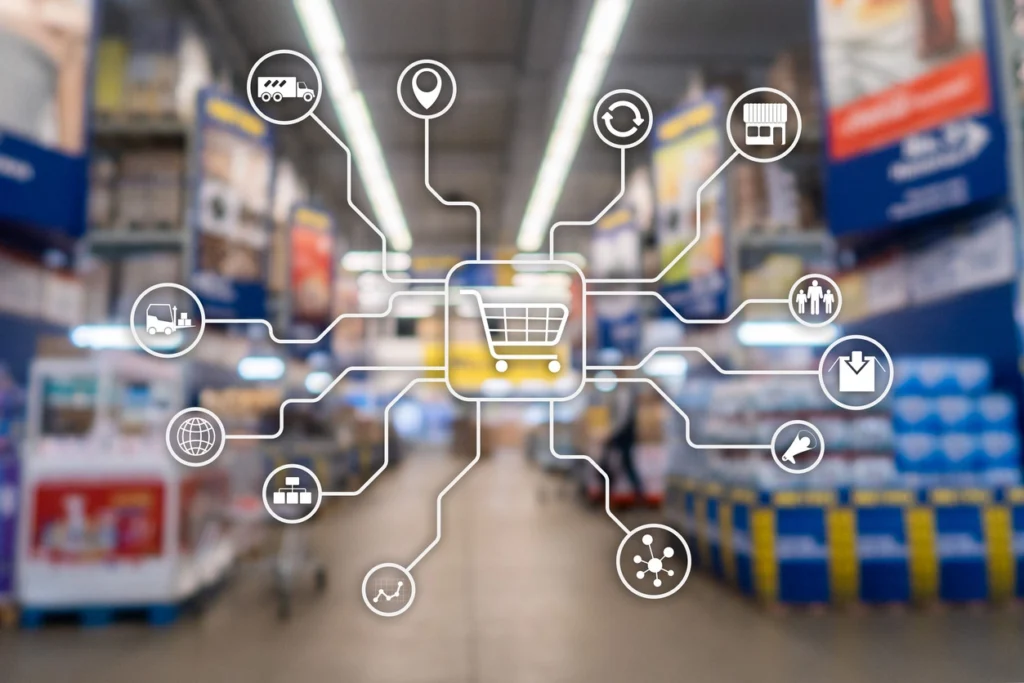
At its core, omnichannel fulfillment means serving multiple sales channels from one coordinated inventory operation.
In a coordinated model, a customer’s inventory can sit in one facility and be managed through one warehouse management system. The team can pull from that shared pool whether the order is a full pallet going to a retail distribution center or a single unit going to a consumer’s front door.
For example, a food or CPG brand may sell wholesale to grocery chains, ship DTC orders through its own website, and fulfill a marketplace. With the right warehouse process, all three order types can come out of one distribution center.
That does not mean every order follows the same workflow. Omnichannel fulfillment works when the inventory is connected but the work is designed around each channel’s requirements.
The warehouse still needs different rules for:
- pallet and case orders going to retail or wholesale customers
- unit-level orders going to individual consumers
- marketplace replenishment and marketplace-specific preparation
- returns, inspections, restocking, and exception handling
The benefit is that the brand does not have to split its inventory across separate warehouses just because the orders come through different channels.
What are the different modes of fulfillment?
Features
B2B Fulfillment
B2C Fulfillment
DTC Fulfillment
Marketplace Fulfillment
Primary Buyer
Retailers, wholesalers, or corporations
Everyday shoppers via retailers
Everyday shoppers via brand website
Platform shoppers (Amazon, Walmart, etc.)
Average Order Size
Pallets, crates, or full truckloads
1–3 individual items per package
1–3 individual items per package
1–3 individual items per package
Shipping Carriers
Freight, cargo, and LTL carriers
Parcel carriers (UPS, FedEx, USPS)
Parcel carriers (UPS, FedEx, USPS)
Platform’s own network (e.g., Amazon Prime)
Key Cost Drivers
Freight rates and compliance penalties
Retailer cuts and peak season surcharges
High customer acquisition and shipping
Storage fees and platform seller commissions
Major Operational Risk
Retailer chargebacks for late delivery
Managing unpredictable order surges
Absorbing total cost of return shipping
Strict inventory caps and sudden policy changes
Running all of these channels well in one building means running different operating rhythms side by side.
Your retail team may be building a compliant pallet for a scheduled appointment while another team is picking individual units for a same-day parcel cutoff. If labor, inventory logic, and dock schedules are not planned around those differences, one channel starts taking capacity from another.
It’s not just one process with two labels on it.
How does DTC fulfillment fit into an omnichannel model?
DTC (also called D2C, or direct-to-consumer) fulfillment is a type of B2C fulfillment that gives your brand a direct relationship with the consumer. It also gives demand a faster way to change.
A retail purchase order may be planned weeks in advance, but a DTC promotion can change the order queue overnight. A marketplace can create another spike based on its own promotions, ranking, or replenishment schedule.
That creates a channel conflict when all three demand the same SKU at once.
A brand may have enough total inventory on paper but not enough inventory that is actually available for each commitment. If the warehouse has not separated allocation rules, a retail order can reserve stock that the DTC channel needs for a promotion. Or the business can hold too much inventory for a planned wholesale order and short the direct channel when demand arrives.
A shared inventory pool helps when it gives the brand:
- one view of what is on hand, committed, available, and in transit
- clear allocation rules for retail, DTC, and marketplace demand
- fewer transfers between warehouses to rebalance channels
- fewer handling touches and less freight tied to those transfers
- more flexibility to direct inventory toward the channel that needs it most
The important distinction is between shared inventory and unmanaged inventory. One pool does not remove the need for channel rules. It makes those rules more important.
What retail compliance and marketplace requirements need ongoing attention?
A missed label, incorrect ASN, or wrong pallet configuration can create a chargeback or a rejected shipment. The product may be ready, the trailer may be available, and the order can still fail because the documentation or pallet did not meet the customer’s requirements.
That is why compliance cannot be treated as a one-time setup task. The warehouse needs a process for:
- tracking changes to retailer routing guides
- updating work instructions and system rules
- checking labels and ASNs before shipment
- confirming pallet and case configurations
- managing appointment requirements and outbound cutoffs
A capable 3PL treats this as ongoing operational work. The goal is not simply to know that a requirement changed. The goal is to make sure the change reaches the people building the order before the freight is on the dock.
When can one provider improve inventory accuracy and control?
Using one logistics provider for omnichannel fulfillment is attainable when the provider can actually run the work behind the model.
When retail, DTC, and marketplace inventory sit in separate buildings, your brand has to reconcile separate systems and separate operating teams. It may need to carry additional safety stock because it cannot move product quickly enough between locations. Rebalancing inventory adds freight, handling, and another opportunity for an error.
One coordinated operation can reduce those handoffs. It can also give your brand one point of contact for warehouse activity, transportation questions, inventory reporting, and exceptions.
If the week’s operations do not follow the forecast, you should not have to call three providers to decide which channel gets the remaining inventory.
The provider still needs to make a decision based your brand’s priorities, but the decision can be made from one inventory position and one operating view.
What should a growing brand expect from an omnichannel 3PL?
Supporting B2B and B2C fulfillment under one roof takes more than available square footage. A growing brand should look for five practical capabilities.
- A WMS built for multi-channel logic. The WMS should support more than a basic ecommerce order feed. It should give your operation visibility into channel commitments, available inventory, allocation rules, order status, and exceptions.
EDI and other integrations also matter for retail orders, ASNs, purchase orders, shipment updates, and marketplace activity.
- A warehouse layout that supports pallets, cases, and unit picks. A facility designed only for pallet movement may not be ready for a growing DTC channel. A parcel operation may not be equipped for retail pallet builds, scheduled appointments, and case-pack requirements.
The right setup accounts for both. It gives the team a way to receive and store palletized inventory, replenish pick locations, build wholesale orders, pick individual units, pack parcels, and stage outbound freight without having every channel compete for the same floor space.
- Cross-trained labor that can move when demand changes. Omnichannel volume does not always arrive evenly. A promotion, seasonal event, product launch, or retail program can change the work mix quickly.
Cross-trained workers give the operation more options. When one warehouse or work area is slow and another is spiking, trained labor can move to the pressure point without starting over. When a same-day cutoff is at risk, supervisors can adjust staffing and sequencing instead of waiting for the next shift.
As Acme Distribution’s team puts it: “Technology can make you work fast, but flexibility comes from well-trained people who know the processes.”
- Retail compliance, packaging, and returns support. Retail shipments need a different kind of accuracy than DTC parcels. DTC orders need more than a fast outbound scan. They need packaging that protects the product, a clear returns process, inspection and restocking rules, and accurate inventory updates when an item comes back.
A provider should be able to explain how it handles both the normal flow and the exceptions. Ask what happens when a return is damaged, when a parcel misses a carrier cutoff, or when a retailer changes its pallet requirements after the process is already live.
- Warehousing and transportation that work from the same plan. The warehouse and the transportation plan should not operate as separate conversations. Retail appointments, DTC carrier cutoffs, marketplace deadlines, full truckload opportunities, and LTL shipments all affect how the work is staged and released.
For pallet-heavy brands, transportation depth matters. That may include company-owned equipment, asset-based FTL and LTL service, direct-to-store delivery, cross-docking, drayage, or intermodal coordination. Indoor rail access and industrial outdoor storage may also matter when the brand’s supply chain includes imported freight, bulky products, or overflow inventory.
Not every brand needs every capability. The point is to make sure the provider’s operating range matches the way the brand’s product actually moves.

How does Acme Distribution support omnichannel fulfillment from Denver?
Acme Distribution is a Denver-based, asset-based 3PL serving manufacturers and growing brands. Our services include contract warehousing, pallet-in/pallet-out distribution, retail distribution, DSD and DTS support, fulfillment and packaging, and company-owned FTL and LTL transportation.
The broader operation also includes drayage and intermodal services, indoor rail spur access, cross-docking, and industrial outdoor storage. That range gives brands a way to connect pallet storage, retail orders, DTC fulfillment, marketplace work, and transportation planning instead of treating each requirement as a separate vendor relationship.
For a brand managing multiple channels, the day-to-day work may include:
- receiving palletized inventory into the warehouse
- picking and packing individual DTC orders
- preparing marketplace replenishment
- applying channel-specific labels and documentation
- handling returns, kitting, packaging, or other value-added work
- building full or partial truckload shipments for retail and wholesale customers
Acme supports this work with warehouse systems and integrations, but the differentiator is not technology alone. Omnichannel fulfillment requires people who understand the process well enough to adjust it when the plan changes.
Acme’s operating philosophy is simple: “We’re in the flexibility business.”
That can mean adjusting labor, changing the sequence of work, or staying with a customer’s schedule when an order needs to move outside the normal pattern.
The goal is not to make every channel look the same. It is to give each channel the right process while keeping inventory, reporting, and decisions connected.
What should you do before channel conflicts become service failures?
If retail purchase orders, DTC promotions, and marketplace demand are beginning to compete for the same inventory, the next step is not to add another warehouse and hope the problem goes away.
Start by mapping the channel mix, SKU commitments, order patterns, inventory levels, retailer requirements, marketplace rules, returns volume, and transportation needs. Then look at where the operation is breaking first: allocation, picking, packaging, compliance, labor, dock timing, or reporting.
For growing manufacturers and brands, Acme can evaluate whether a Denver-based omnichannel fulfillment model can support both B2B and D2C growth from one coordinated operation. The useful trigger is simple: if your team is already rebalancing stock, chasing multiple reports, missing channel cutoffs, or managing separate providers for wholesale and ecommerce, it is time to review the model before the next volume increase makes the conflict harder to fix.
Ready to request a quote for omnichannel fulfillment services in Denver?
If your retail, DTC, or marketplace orders are competing for inventory, contact Acme Distribution to request a quote and discuss your channel mix, inventory flow, compliance requirements, and next-stage warehouse needs.
Omnichannel Fulfillment FAQ
Can B2B and B2C orders be fulfilled from one inventory pool?
Yes, if the 3PL has the right WMS, integrations, allocation rules, warehouse layout, and cross-trained labor. A retail pallet order and a DTC unit order can come from the same facility without being treated as the same type of work.
The key is knowing what inventory is available, what is already committed, and which channel has priority when demand changes.
Why is omnichannel fulfillment in Denver useful for growing brands?
Denver offers central U.S. access through major interstate, rail, and air connections. That can support retail distribution, marketplace replenishment, and DTC delivery to many regions without making every shipment depend on a coastal facility.
The location is only one part of the decision. The provider also needs to support inventory accuracy, retailer compliance, piece-pick work, pallet flow, transportation, and flexible labor.
The key is knowing what inventory is available, what is already committed, and which channel has priority when demand changes.
What should a brand look for in an omnichannel 3PL?
Look for a provider with multi-channel WMS and EDI capability, clear inventory allocation rules, experience with retailer compliance, DTC packaging and returns processes, cross-trained labor, proactive communication, and transportation depth.
For pallet-based brands, it is also worth asking about contract warehousing, pallet-in/pallet-out distribution, DSD and DTS, FTL and LTL transportation, cross-docking, drayage, intermodal, rail access, and overflow or industrial outdoor storage.
The location is only one part of the decision. The provider also needs to support inventory accuracy, retailer compliance, piece-pick work, pallet flow, transportation, and flexible labor.
The key is knowing what inventory is available, what is already committed, and which channel has priority when demand changes.